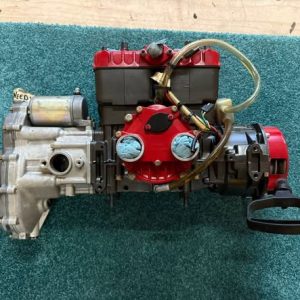
The Rotax 582 “Blue Head” RAVE Engine – Built by Rotax Rick combines familiar Rotax architecture, liquid cooling, compact construction, and installation potential for an appropriately matched light aircraft.
Accurate use of Rotax 582 Blue Head, Rotax 582 Blue Head RAVE Engine, and Rotax 582 Aircraft Engine keywords improves visibility without overstating current serviceability.
The Rotax 582 Two-Stroke Engine, Rotax 582 Ultralight Engine, Rotax 582 Aviation Engine, and Rotax 582 65HP Engine phrases represent closely related searches for lightweight aircraft propulsion.
The Rotax Blue Head Engine uses a liquid-cooling arrangement, while the Two-Cylinder Aircraft Engine architecture supports a compact powerplant configuration.
A Rotax Aviation Engine should be selected through technical evaluation rather than brand recognition alone.
Why Exact Engine Identification Matters
Every model suffix, serial marking, gearbox designation, modification, and replacement component should be recorded because similar Rotax engines may differ internally or externally.
The buyer should determine whether the engine was rebuilt from a complete core, assembled from mixed components, upgraded from another configuration, or built using new and used parts.
Confirming Rotax Rick Build Records
The builder’s name alone should not replace a detailed review of internal specifications, clearances, service information, and operating history.
The records should explain whether the work included a complete rebuild, top-end service, crankshaft replacement, seal replacement, gearbox service, carburetor work, ignition inspection, or another defined scope.
Evaluating RAVE Engine Condition
The presence of external RAVE housings does not independently prove that the complete system operates correctly.
Professional service can support more consistent performance from the Rotax 582 RAVE Engine.
Managing Two-Stroke Aviation Requirements
Fuel quality, oil selection, mixture preparation, and oil-injection configuration should be confirmed for the exact installation.
The buyer should determine whether the engine uses oil injection, premixed fuel, or another documented lubrication arrangement.
Aircraft Engine Temperature Management
Leaks, corrosion, hardened hoses, loose clamps, damaged radiators, and trapped air can reduce system effectiveness.
Coolant hoses should remain flexible, secure, correctly routed, and protected from heat, abrasion, sharp edges, and moving components.
Evaluating Internal Engine Components
A clean exterior does not reveal the condition of internal rotating and reciprocating components.
Differences between cylinders can indicate ring, piston, cylinder, seal, or measurement concerns that require further evaluation.
Dual Carburetor Fuel Delivery
Complete carburetor preparation supports smoother Rotax 582 engine operation.
A setting that worked on another aircraft may not be suitable for the receiving installation.
Understanding Rotax 582 Ignition Redundancy
Complete ignition evaluation supports more dependable operation of the Rotax Aviation Engine.
Ignition checks should be completed through controlled procedures appropriate to the engine and aircraft installation.
Understanding the Rotax 582 Gearbox
Complete engine, gearbox, and propeller evaluation supports a more suitable installation.
Professional matching protects the Rotax 582 Aircraft Engine and connected propeller system.
Exhaust System and Engine Breathing
A modified, damaged, leaking, or incorrectly supported exhaust may contribute to performance concerns or component stress.
Exhaust components should be inspected for cracks, corrosion, dents, failed welds, loose springs, worn joints, heat damage, and evidence of airframe contact.
Lightweight Aircraft Engine Advantages
Accurate weight information supports responsible aircraft planning.
The complete conversion should be reviewed through appropriate engineering and maintenance processes.
Matching the Rotax to the Airframe
The Rotax 582 may be considered for ultralights, experimental aircraft, gyrocopters, trikes, powered parachutes, amphibious projects, and other compatible recreational aircraft.
Professional planning supports a more dependable experimental-aircraft project.
Matching the Engine to a Light Sport Project
The buyer should review aircraft limitations, maintenance requirements, operating rules, and installation data before purchase.
A specialist-built engine may offer valuable project potential while still requiring aircraft-specific approval, inspection, testing, and documentation.
Documenting Time Since Build
The seller should disclose total engine time, time since the documented build, time on the crankshaft, time on the gearbox, and time on major replacement components when known.
Organized history supports a more informed Rotax 582 Blue Head purchase.
Understanding Ground-Run Limitations
Engine runs should be completed using suitable mounting, cooling, fuel, exhaust, propeller-safety, and monitoring procedures.
The engine should not be operated without a suitable propeller, dynamometer, or approved load arrangement when loading is required.
Pre-Purchase Mechanical Testing
Mechanical evaluation check here may include compression checks, cylinder inspection, crankshaft assessment, seal review, bearing evaluation, plug inspection, and examination for leaks or abnormal deposits.
Any abnormal resistance, noise, corrosion, play, or contamination should be investigated.
Buying a Blue Head RAVE Engine
The buyer should obtain enough information for a qualified Rotax engine specialist or experienced aviation mechanic to evaluate the powerplant.
- Determine whether the radiator, exhaust, carburetors, air filters, starter, gearbox, ignition modules, mounts, instruments, manuals, and build records are included.
- Confirm whether the engine has been broken in, operated in flight, stored after assembly, removed after a fault, or sold as an unflown project engine.
- Require shipping support that protects the crankcase, heads, gearbox, carburetors, ignition, fittings, shafts, wiring, exhaust connections, and identification plate from impact, moisture, and movement.
Safe Handling of the Blue Head Engine
The engine should not shift, tip, or contact the crate during transportation.
Responsible storage supports the future value of the Rotax Blue Head Engine.
Completing a Rotax Aviation Engine Project
The engine mount, attachment hardware, vibration isolators, alignment, clearances, weight, and center of gravity should be evaluated before final installation.
Throttle and enrichment controls should move smoothly through the intended range without binding or unequal carburetor travel.
Abnormal vibration, temperature, noise, leakage, ignition drop, or throttle response should receive immediate investigation.
Long-Term Two-Stroke Aircraft Engine Care
Repeated adjustment should not replace diagnosis of an underlying engine or installation problem.
Preventive maintenance protects both the powerplant and the complete aircraft installation.
Evaluating Rotax Aircraft Engines for Sale
A documented specialist build can add value when the scope, components, measurements, and test results are described accurately.
Total project cost may include the engine, gearbox, propeller, radiator, exhaust, carburetors, filters, mounts, controls, instruments, fuel system, wiring, installation labor, testing, shipping, and documentation.
Final Thoughts on the Rotax 582 Blue Head
The Rotax 582 “Blue Head” RAVE Engine – Built by Rotax Rick can provide valuable replacement, restoration, experimental-aircraft, ultralight, or spare-engine potential when its identity, build scope, condition, and compatibility are verified.
The strongest purchasing decision begins with confirming the exact engine model, serial number, RAVE configuration, builder documentation, internal parts, crankshaft history, operating hours, gearbox ratio, carburetors, ignition, cooling system, exhaust, test results, and included accessories.
Whether the product is described as a Liquid-Cooled Aircraft Engine, Two-Cylinder Aircraft Engine, Lightweight Aircraft Engine, or Experimental Aircraft Engine, complete system compatibility remains essential.
With verified identity, documented internal components, suitable mechanical condition, professional installation, organized records, and routine maintenance, the engine can provide dependable long-term value.